Agile testing is not “test at the end of the sprint.” Teams that bolt QA onto the last two days of a two-week sprint end up with the worst of both worlds: rushed testing and delayed releases. We see this pattern repeatedly. The sprint ends, half the test cases are still pending, and the team either ships untested or pushes the release to the next sprint.
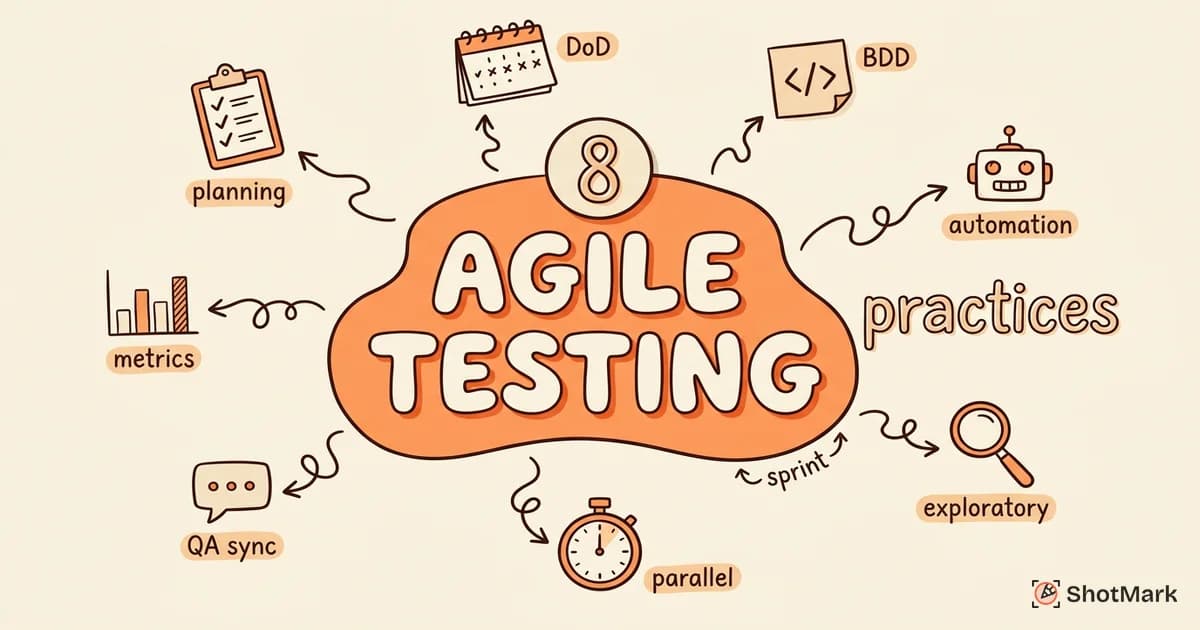
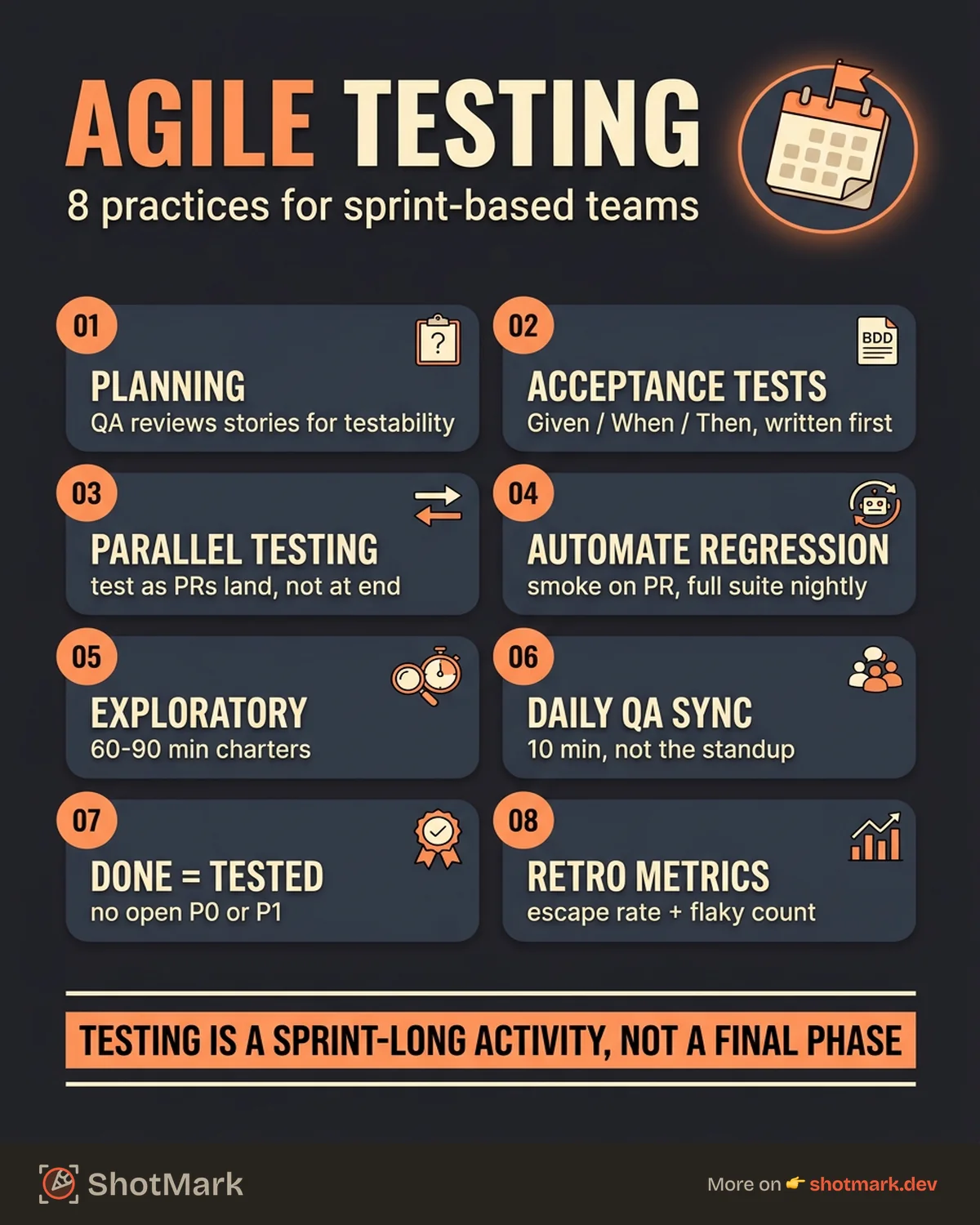
Effective agile testing is continuous, collaborative, and embedded in every phase of the sprint. Here are 8 practices that make it work.
What Agile Testing Actually Means
In agile, testing is a continuous activity, not a phase. The whole team owns quality, not just QA. Developers write unit tests. QA writes acceptance tests. Product managers define testable acceptance criteria. Everyone contributes to the quality of the release.
This principle comes from the Agile Testing Quadrants, a framework originally proposed by Brian Marick and popularized by Lisa Crispin and Janet Gregory in their book “Agile Testing.” The quadrants organize testing activities into four categories based on two axes: business-facing vs technology-facing, and supporting the team vs critiquing the product.
The practical implication: agile testing methodology is not a single activity. It’s a portfolio of testing practices applied at different points in the sprint, by different people, for different purposes.
8 Agile Testing Practices
1. QA Joins Sprint Planning
Testing starts before any code is written. QA should be in sprint planning, reviewing user stories for testability and completeness.
When QA reviews a story during planning, they ask questions like: “What happens when the user enters invalid data?” or “How should this behave on mobile?” These questions surface missing acceptance criteria before the sprint starts, which prevents rework later.
QA also estimates testing effort alongside development. If a feature takes 5 story points to build, the team should account for the testing work too. Otherwise, every sprint ends with a testing bottleneck.
2. Write Acceptance Tests First
Before developers write a single line of code, QA writes acceptance tests in BDD format (Given/When/Then). These tests define what “done” looks like from a business perspective.
Example:
Given a user has items in their cart
When they enter a valid credit card and click "Pay"
Then the order is confirmed and a receipt email is sent
This gives developers a clear target. It also means tests are ready to run as soon as the feature is built, not days later. For more on this approach, see our guide on shift-left testing and what it means for QA teams.
3. Test in Parallel With Development
The traditional flow (develop first, test second) doesn’t work in agile. Instead, testing happens continuously as developers merge pull requests.
As soon as a PR is merged into the feature branch, QA tests it. Use feature branches and preview environments to give QA access to in-progress features without waiting for a full staging deployment.
This eliminates the “sprint+1 testing” anti-pattern, where QA tests Sprint 12 features during Sprint 13 while developers are already building Sprint 13 features. Parallel testing keeps everyone in the same sprint context.
4. Automate the Regression Suite
Manual regression testing doesn’t scale in agile. When you ship every two weeks, running 200 manual test cases before each release burns through your QA team’s time and energy.
Automate your regression suite. Run smoke tests on every pull request. Run the full regression suite nightly or before release. Tools like Playwright and Cypress make web application regression testing accessible for most teams.
One important rule: keep automation maintenance in the sprint backlog. Flaky or broken automated tests are worse than no automated tests, because they erode trust in the test suite.
5. Run Exploratory Testing Sessions
Automated tests verify known scenarios. Exploratory testing discovers unknown ones. Both are essential for agile testing practices.
Structure exploratory testing as time-boxed sessions (60-90 minutes) with a specific charter: “Explore the checkout flow to discover edge cases in payment error handling.” This keeps the session focused while allowing the tester to follow their instincts.
Document findings as bug reports with full context. During exploratory sessions, bugs are discovered in real time, and the context (what you clicked, what appeared in the console, what network requests fired) is freshest at that moment. ShotMark captures screenshots, console logs, and network requests in one click, making it fast to document exploratory findings without interrupting the testing flow.
6. Daily QA Sync (Not Just Standups)
Standups are for the whole team. A daily 10-minute QA sync is for focused testing discussion.
Use this sync to triage new bugs, unblock QA team members, and prioritize testing work for the day. If a critical bug was found yesterday, the QA sync is where you decide whether it blocks the release or goes to the backlog.
Keep the bug backlog visible. A shared board (physical or digital) showing open bugs by severity helps the team make informed decisions about release readiness.
7. Definition of Done Includes Testing
A feature is not done when the developer says “it works on my machine.” Make your Definition of Done (DoD) explicit and visible to the entire team.
A strong DoD for agile teams includes:
- Unit tests written and passing
- Integration tests passing in CI
- QA has verified acceptance criteria
- No open P0 or P1 bugs for this feature
- Regression suite passing
When the DoD includes testing milestones, developers and QA share accountability for quality. There’s no ambiguity about whether a story is ready for release.
8. Sprint Retrospectives Include QA Metrics
Retrospectives should include data about testing, not just feelings. Track and discuss these metrics each sprint:
- Bugs found in sprint vs escaped to production: This is your most important quality metric. A high escape rate means testing needs to shift earlier or cover more scenarios.
- Test coverage trends: Are you adding test coverage for new features or accumulating test debt?
- Time spent on regression vs exploratory testing: If 80% of QA time goes to regression, you’re under-investing in automation.
- Flaky test count: Flaky tests waste time and erode trust. Track them and fix them.
Use these metrics to decide which agile testing best practices to improve next sprint. Without data, retrospectives become opinion sessions.
Agile Testing Quadrants Explained
The Agile Testing Quadrants, based on Brian Marick’s original framework, help teams understand which types of testing to apply and when.
Q1 (Technology-facing, supports the team): Unit tests, component tests. Written by developers. Run automatically in CI. These validate that the code works as designed.
Q2 (Business-facing, supports the team): Functional tests, story tests, acceptance tests. Written by QA and developers together. These validate that the code meets business requirements.
Q3 (Business-facing, critiques the product): Exploratory testing, usability testing, beta testing. Performed by QA and real users. These discover issues that scripted tests miss.
Q4 (Technology-facing, critiques the product): Performance testing, security testing, load testing. Often run by specialized engineers or tools. These validate non-functional requirements.
A healthy agile testing strategy covers all four quadrants. Most teams over-invest in Q1 and Q2 and under-invest in Q3. Exploratory testing in Q3 is where you find the bugs users actually care about.
Common Agile Testing Anti-Patterns
“Sprint+1 testing.” QA tests features from the previous sprint because there wasn’t time to test them in the current one. This creates a permanent one-sprint delay and means QA is always working on stale context. The fix: test in parallel with development (Practice 3).
QA as gatekeeper instead of collaborator: When QA only receives features at the end of the sprint, they become a bottleneck. When QA is involved from sprint planning onward, they’re a partner. The fix: Practices 1 and 2.
Only manual testing with no automation investment: Manual regression testing consumes more QA hours every sprint as the product grows. Without automation, QA capacity shrinks relative to the codebase. The fix: Practice 4, with automation work tracked in the sprint backlog.
Skipping regression under deadline pressure: “We’ll just test the new features” is how production incidents happen. Regression tests protect existing functionality. The fix: automate regression so it runs without manual effort.
Not allocating sprint points for test automation work: If automation is always deprioritized, your regression suite falls behind. Treat test automation as a first-class work item, not a side project.
No QA role in the team: Some agile teams interpret “whole team quality” as “we don’t need QA.” This misses the point. Everyone owns quality, but dedicated QA brings specialized skills: systematic test design, risk-based testing, and a mindset focused on breaking things rather than building them. The best agile testing methodology includes QA as a full team member, not as an afterthought or a shared resource across multiple teams.
Measuring Agile Testing Success
Track these metrics sprint over sprint to see if your agile testing practices are improving:
- Bug escape rate: Percentage of bugs found in production vs found in testing. Target: under 10%.
- Defect density: Bugs per story point or per feature. A rising trend signals process issues.
- Automation coverage: Percentage of regression tests that are automated. Target: 70%+ for stable features.
- Test cycle time: How long from “feature dev complete” to “QA verified.” Shorter is better.
- Sprint completion rate: Percentage of stories fully tested within the sprint. If this is consistently below 80%, your team is overcommitting or under-resourcing QA.
Review these in sprint retrospectives (Practice 8) and set improvement targets for the next sprint.
Tools for Agile Testing
| Category | Tools | Notes |
|---|---|---|
| Test Management | TestRail, qase.io | qase.io has sprint-aware features |
| Automation | Playwright, Cypress | Open source, fast execution |
| Bug Reporting | ShotMark | One-click capture with console and network data |
| CI/CD | GitHub Actions, CircleCI | Automated test triggers on every PR |
The tool matters less than the practice. A team with Playwright and no regression strategy will still ship bugs. A team with manual testing and strong agile testing practices will outperform them.
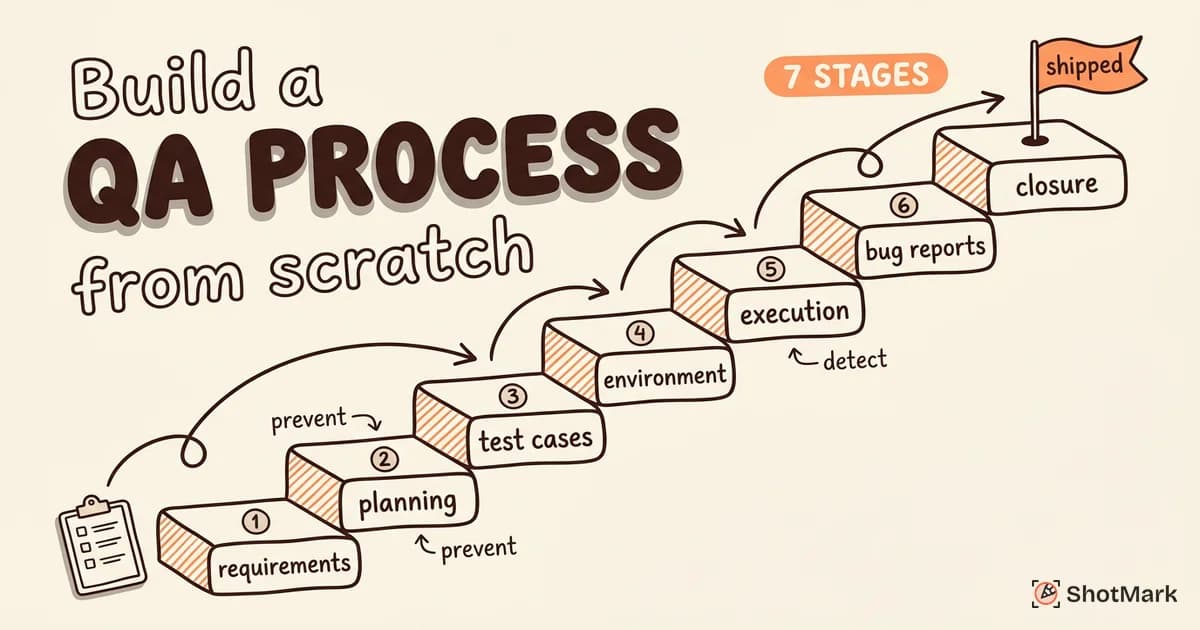
For a complete framework on building your QA process (including how these practices fit into the bigger picture), see our guide on how to build a QA process from scratch.
Testing Every Sprint, Shipping With Confidence
Agile testing works when it’s woven into the sprint, not tacked on at the end. Start with the practices that address your team’s biggest pain points. If bugs keep escaping to production, focus on regression automation and exploratory testing. If sprints always end with a testing crunch, start including QA in sprint planning and testing in parallel with development.
Quality in agile is not a phase. It’s a habit that the whole team builds together, one sprint at a time.
ShotMark makes bug reporting instant so your QA team spends more time testing and less time writing tickets. Join the waitlist .
Get new posts in your inbox.
One email when we publish: notes on QA, AI, and shipping faster. No spam, unsubscribe anytime.